Red Wings GM Candidates: Brett Peterson
Taking a close look at potential candidates
Previous articles:
Vegas Assistant GM Vaughn Karpan
Carolina Assistant GM Tyler Dellow
Buffalo VP of Hockey Strategy & Research Sam Ventura
Dallas Assistant GM Scott White
One of the principal complaints about how late Detroit’s decision came to reboot their hockey ops department was the belief that all the good candidates had been snatched up.
In writing these articles, I feel confident that’s not the case.
With the important caveat that we can’t really know who is truly interested in the position, Elliotte Friedman’s reporting suggests there is very strong interest in the opening.
As well there should be: Detroit has a lot going for it, staring with an owner with a reputation for being hands off, but also willing to splash the cash to the upper reaches of the salary cap, and some intriguing building blocks in the form of Mortiz Seider and Lucas Raymond.
Detroit also has arguably the best barn in the entire league, with a dead simple routine whether you are suiting up for practice or game day. Quality of life is very high in the bougie enclaves of metro Detroit, and if you have family members with aspirations to play hockey at the highest level, elite-quality youth hockey, three top NCAA programs — Western Michigan, Michigan and Michigan State, and the USNTDP are all close by.
Add it all up, and Chris Ilitch should have no problem hiring a highly capable person to run his hockey ops department.
Earlier this offseason, the New Jersey Devils replaced Tom Fitzgerald with Sunny Mehta, who formerly worked in the Devils organization before being hired away by the Panthers. Today, we’ll consider another Panthers front office exec in the form of assistant general manager Brett Peterson.
One of the biggest criticisms of Steve Yzerman’s tenure as GM is the Detroit front office was viewed as being borderline antagonistic towards players during contract negotiations. When you combine that with how successful teams like Florida and Montreal have been with GMs who cut their teeth as player agents, there’s been growing interest in hiring managers who will prioritize healthier relationships with their top talent.
In a capped league, it’s just good business to develop cordial if not deep relationships with your star players. Mitch Marner got sick of being under the microscope in the GTA and has thus far thrived in the desert; Connor McDavid and Macklin Celebrini signed short deals, suggesting that if they didn’t like the direction their current teams are heading, they would be willing to move to a new destination.
With this being the case, you can see the interest in hiring a former agent as your next GM, which brings us to our next candidate to fill Detroit’s vacancy to run their hockey ops department.
Brett Peterson’s Background
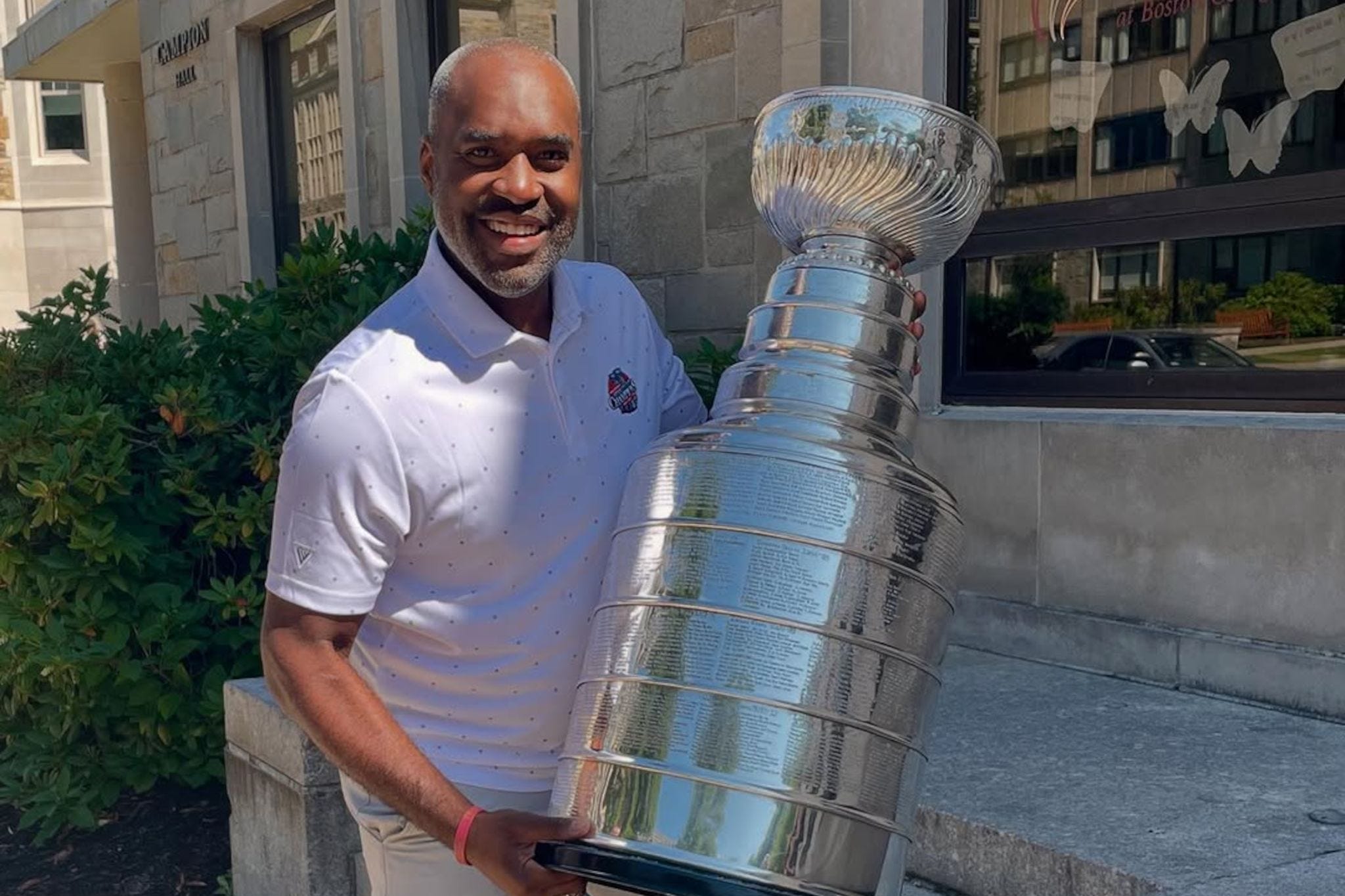
Peterson was a self-described depth player for a very good Boston College hockey team that won the national championship in 2001. After finishing his college hockey career, the defenseman bounced around the ECHL before getting a cup of coffee with the Grand Rapids Griffins in his final season of pro hockey.
Once the playing career came to an end, Peterson’s hockey career blossomed as an agent.
Former BC teammate — and former Red Wing — Patrick Eaves played a pivotal role in getting Peterson his start as an agent, as he introduced him to Bill Zito at a hockey camp.
Zito relayed his initial impression of Peterson in the article linked above:
“So, he comes to the camp and there was a lot of pretty high-end NHL guys there,” Zito said. “In walks this guy Chubby and the room erupts. He just takes over. And he doesn’t take over by being assertive. It’s his personality. Everybody loves him. His persona. He’s smiling and happy and fun. Hard working on the ice. So much energy.”
…That’s where the thought of another line of work came to be: That guy would make a great agent.
When Zito was hired to lead the Panthers, he brought along Peterson; while his work began on community-based initiatives, which makes sense given his personality and people skills, at the time of the hire Zito left the door open for a much larger role:
In the first few months of their tenure, Zito intentionally left Peterson’s role open-ended because of the varied elements that he has expertise in. Negotiations and contracts. Scouting and recruiting players. Thorough understanding of the NHL’s collective bargaining agreement. Developing their own on the current roster.
In addition to his work with the Panthers, Peterson has served in the hockey ops department for USA Hockey, serving as both an assistant GM and general manager for four separate World Championship tournaments. He served as GM for the most recent tournament that took place in May.
While the Team USA didn’t do so hot this time around, Peterson worked with a large number of current NHL GMs in assembling the squad:
The U.S. Men’s National Team Advisory Group, led by Vanbiesbrouck and including NHL general managers Stan Bowman (Edmonton Oilers), Craig Conroy (Calgary Flames), Chris Drury (New York Rangers), Tom Fitzgerald (New Jersey Devils), Mike Grier (San Jose Sharks), Bill Guerin (Minnesota Wild), Chris MacFarland (Colorado Avalanche), Chris Patrick (Washington Capitals), Eric Tulsky (Carolina Hurricanes), Don Waddell (Columbus Blue Jackets) and Bill Zito (Florida Panthers), will assist Peterson in assembling the roster for 2026 U.S. Men’s National Team.
Simply put, his time with both the Panthers and USA Hockey make him a highly qualified candidate.
Brett Peterson’s Track Record
As mentioned previously, Peterson has been part of Zito’s agency since Zito encouraged him to become an agent after his playing career ended. Peterson was elevated to the VP of Hockey for the Wasserman Media Group, indicating he was viewed as an important contributor to the agency.
Zito also made the decision to hire Peterson his assistant general manager for the Panthers when Peterson was just 39 years old.
As mentioned in the article on Vaughn Karpan, successful general managers tend to share a trait of becoming AGMs in their mid-40s, with several earning the promotion at an even younger age. So this is another factor in Peterson’s favor.
Brett Peterson also serves as co-general manager of Florida’s AHL affiliate the Charlotte Checkers, along with fellow Panther exec Paul Krepelka.
Add it all up, and Peterson’s track record in the form of career development is one that suggests he has all the necessary traits to be a successful NHL general manager. As would be expected, he’s already interviewed for NHL general manager jobs in Vancouver and Nashville.
Like Tyler Dellow, it’s a matter of when, not if, Peterson gets the nod to run his own franchise.
Peterson’s Analytical Background
For this section, I am going to lean on what Brett Peterson said at the MIT Sloan Sports Analytics Conference on a panel called Hard Cap Constrains: Roster Construction in the Hard Cap Era of Hockey.
Here’s the video:
Highlights:
Special players can do special things: Peterson talked a bit about how Tampa was the standard as the Panthers attempted to break through, and how they needed to make hard decisions on how to build their roster.
Peterson discussed how creating an identity and culture can help attract top players. This panel took place the season after they made the franchise-altering trade to acquire Matthew Tkachuk.
As a manager, you have your recipe: Peterson said you are always assessing how your current team fits with your plan and how quickly you can get to your long-term goals.
In another panel, he referenced the first 60 games as giving the Panthers a feel for where they are and what they may need when it comes to tailoring their roster to prepare for the push for the playoffs.
There are a lot of people who weigh in on the decisions: Peterson described what it takes to make good decisions — a collective group of people who figure out what’s the best decision for the organization. He seems comfortable working with both traditional scouts and the analytics group.
Finding underutilized players: Peterson was asked about unearthing guys like Gustav Forsling and Sam Bennet. He credited it to a combination of old school scouting and using analytics, which he called ‘present day technology’ or something along those lines.
He also talked about targeting undrafted players, pointing out that with the NHL draft they are typically selecting players who are 17.5 years old, with many having a long development path in front of them. He mentioned the NFL draft by comparison where guys are often 21 or 22 years old when drafted and as a result can contribute quickly.
Overall, he seems like a guy who is comfortable with both old school and new school methods for evaluating players. He specifically mentioned something his data analysis team showed him about passing stats that really impressed him. He also commented on how it’s kind of fun listening to the amateur scouts battle it out to make the case for their guy.
While I don’t get the sense he’s at the bleeding edge of advanced statistical analysis, I suspect he really likes the way the Panthers play and he’s open to stats that help them target guys who fit their culture. Bottom line, he seems comfortable working with scouts and analysts, and believes that working with a group of people leads to the best decisions.
That’ll work.
Is Brett Peterson a Good Choice?
I’m optimistic Brett Peterson would be a good hire. There’s a lot to like about his career to date, and he’s received two recent interviews for other GM positions within the league. When he talks about culture and it’s role in forming the championship-winning Panthers, you can see how that would resonate with an owner in Chris Ilitch who just learned his captain has requested a trade and offered up little in the way of realistic trade partners.
In a panel when discussing the composition of successful NHL teams, he made a comment how if you have a strong culture, someplace people like to work, they are going to work hard. When you look at how Detroit has spit the bit four years running in the month of March when the games got tough, Detroit clearly doesn’t have that sort of culture.
While culture can be tough to define, let alone build, Peterson talks regularly about the culture they have in Florida, and the acquisition of guys like the Tkachuk brothers, Seth Jones, and Brad Marchand are clear fits for their identity.
I prefer Tyler Dellow for the simple fact he’s played a role in two organizations that have strongly titled the ice during his time there, combined with how he talks about ‘pricing’ various aspects of roster management when it comes to building a successful team. Detroit isn’t getting a Sasha Barkov level talent, so I still view Carolina as the team to emulate.
But that doesn’t mean I’d have any issues at all with Brett Peterson.
The positives are plenty: he achieved the assistant general manager role at an age when many very good GMs first became AGMs; he’s played a big role in hockey ops for Team USA in recent World Championship tournaments; he comes from a background of serving as a player agent, and that would be a big improvement for an organization that has been reported to alienate some of their players during contract negotiations; when serving on panels at the MIT Sloan Analytics Conference, he’s talked about being able to work with old school and new school player evaluation groups, which would meet the one stated preference with Chris Ilitch wanting someone with an analytics background; finally, his start in a community-facing role in Florida could address the other stated desire by Chris Ilitch, namely someone who could make metro Detroit generally and the Red Wings in particular a desirable destination for the best players in the sport.
So while he’s not my first choice, I would have plenty of time for Brett Peterson as Detroit’s next general manager.


