Detroit's Next Captain
Moritz Seider will lead the Red Wings back to the promised land
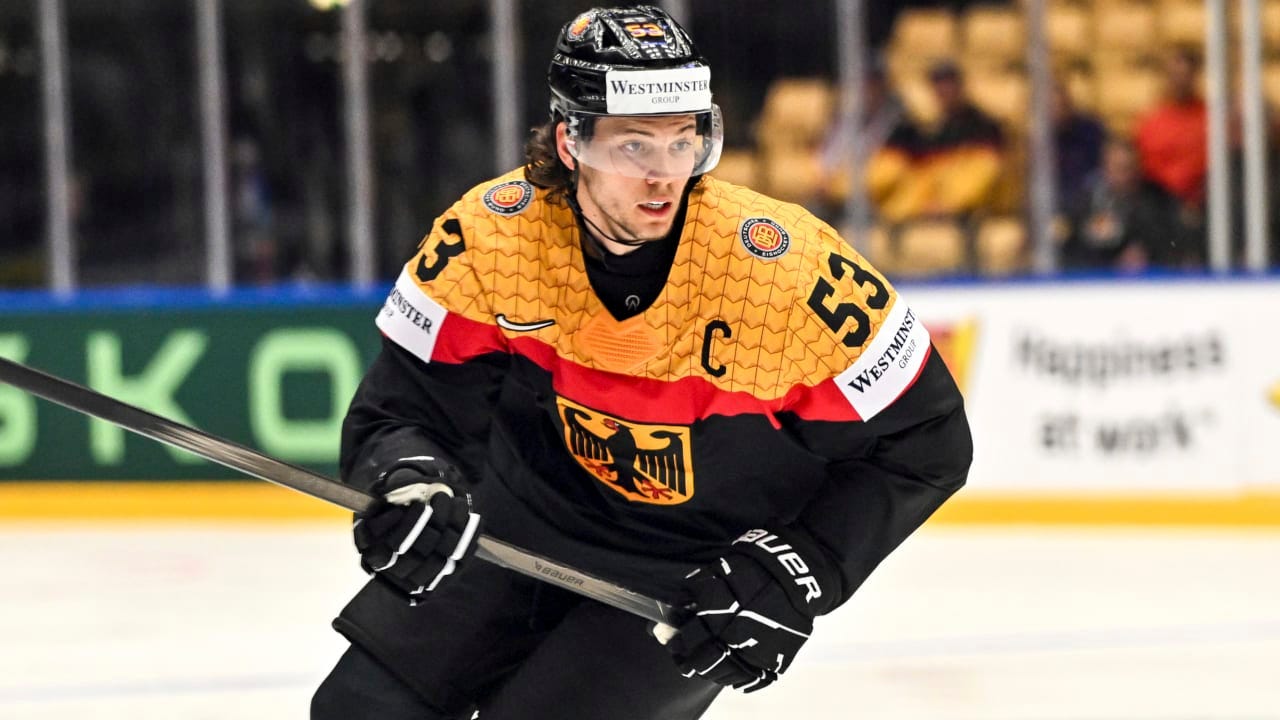
While we await the outcome of Dylan Larkin’s trade request, there’s one thing we can be supremely confident about: the Red Wings are about to receive a massive upgrade in leadership. That’s due to the fact that at some point prior to the start of the season, defensemen Mortiz Seider will be named the new team captain.
Recent Red Wings teams have been starved for leadership, but — over the 25 years of their playoff streak that’s become a distant memory — the organization was once spoiled in this department, having been led for 19 years by Steve Yzerman and then 6 years by Nick Lidstrom.
From 1986 to 2012, the Red Wings missed the playoffs once while winning 4 Stanley Cups, winning their Conference crown 6 times, and playing for the Conference title 10 times over that time frame. While Detroit had several advantages back then, most notably the ability to outspend nearly every other franchise, the leaders on those teams were some of the best in the business.
Back in 2020 when Dylan Larkin was appointed team captain, the organization had gone two years without a player wearing the C on his chest, leaving the captaincy vacant after Hank Zetterberg retired. I don’t criticize Steve Yzerman much, but I wasn’t thrilled with him naming Larkin captain for the 2020-21 season. At that time Larkin was understandably immature, with a rep around the league as a diver; he simply didn’t give off the vibes of a guy whose voice would be respected inside the locker room, let alone across the league.
Of course if you were going to appoint someone on that 2020 team as captain, it was going to be Larkin, and I suspect Yzerman felt bestowing the C on Larkin may help to mature the young center.
With great power comes great responsibility, that sort of thing.
We can now say conclusively that the captaincy did not suit Larkin, but it’s also fair to question Yzerman’s decision here: there was no reason he couldn’t have kept the C on ice for a few more seasons while his core developed before settling on the player who would lead the rebuild.
While I can see a decision tree that implied you either needed to name Larkin captain at some point around that time or trade him, but ultimately that’s how it’s going to play out after you’ve spent the past six years in the wilderness. That’s on Yzerman, and I am generally not one to point fingers at him.
Larkin never rose to the challenge, and Yzerman will make the correct decision when he passes the captain role to Moritz Seider.
Before we go any further, let me take a brief pit stop here and say that I agree with the general thought that leaders come in all sorts: extroverts and introverts, long-time vets and fresh faced youngsters, the biggest or the littlest guy in the room, forwards, defenders, and sure, even goalies. So while I have found Larkin wanting as a leader, it’s not due to age or any other easily definable characteristic.
Let’s take a short detour to remember a leader who was in a similar situation to the one Mo Seider will find himself in, a guy who went on to become loved by Detroiters as the face of a franchise that went on to play in 6 straight conference finals while appearing in two championship series, ultimately winning a league championship.
The Type of Leader Detroit Embraces
If there’s one leadership transition with a Detroit sports team I think fits most closely to the transition from Dylan Larkin to Moritz Seider, it would be the one that took place with the Detroit Pistons at the dawn of the century. Grant Hill’s leadership with those late ‘90s Pistons teams reminds me quite a bit of Larkin’s; Hill had it all, from the blue blood pedigree as a player at Duke, to the cheering section from the ESPN talking heads. So when the Pistons drafted Hill 3rd overall in 1994, he was believed to be the cornerstone who would return the Pistons back to being championship contenders following their 1989 and 1990 back to back NBA championships.
That didn’t happen.
Hill never fit the identity of what the Pistons have always been about when they were at their most formidable, and as such, was never fully embraced by the fans. A player who won at an absurd clip while surrounded by NBA lottery talent at Duke, Hill wasn’t capable of leading a team like the Pistons who weren’t going to out-talent teams on a nightly basis.
Grant Hill simply didn't have that dawg in him.
When it became obvious Hill wasn’t going to sign a contract extension in Detroit, general manager Joe Dumars traded him for the player who was unquestionably the centerpiece of the team that won the 2004 NBA championship: Ben Wallace.
While Grant Hill never won over Detroit sports fans, Ben Wallace was held up as a source of pride about what it meant to be a Detroiter. Wallace was an undersized 6 foot, 9 inch center; he played his college ball at places you’ve likely never heard of, first at Cuyahoga Community College and then Virginia Union. When the NBA held their 1996 entry draft, Wallace didn’t hear his name called.
Ben Wallace was the polar opposite of Grant Hill.
When the trade between Detroit and Orlando was announced, it was considered one-sided, but what could Joe Dumars be expected to do when he was reduced to a sign and trade situation with what was supposed to be his cornerstone piece, whom he was sending off to become the Magic’s cornerstone piece?
But then, something remarkable happened: Ben Wallace thrived in Detroit, and as he led those Pistons teams, he became a symbol for how Detroiter’s tend to view themselves. He came from a humble background, and through the hard work that’s been referred to as a blue collar work ethic, Wallace brought both himself and his team to the mountaintop. There was a phrase that came to symbolize the city back then:
Detroit Hustles Harder.
Point guard Chauncey Billups used to growl ‘if it ain’t rough, it ain’t right’ and that Pistons championship team fit Detroiters to a T.
Ted Lindsay could certainly appreciate an athlete like Ben Wallace. For opponents, nothing was ever going to come easy when facing the undersized center who, as a ferocious defender and rebounder, was the heart and soul of that era of DEETROIT BASKETBALL (if you know, you know).
Simply put, Ben Wallace was embraced by the city in a way Grant Hill could never hope to be appreciated outside of Durham, North Carolina.
The Moritz Seider Era
Now let’s not get it twisted: unlike Ben Wallace who went undrafted, Moritz Seider was the 6th overall draft pick in Steve Yzerman’s first draft class as Red Wings general manager. And while Seider being drafted that high was a shock on draft night, time has proven it was the correct decision.
With that caveat out of the way, I do believe Seider as captain will have the same impact on the Red Wings that Ben Wallace had on the Detroit Pistons.
There’s one important similarity between Wallace and Seider: Moritz plays internationally for Germany, a country that is not a hockey blue blood. At the start of each tournament, the expectation is for the United States, Canada, Sweden and Finland to compete for the top medals.
Germany is often an afterthought.
Seider, however, has been impressive in these international tournaments where he’s been expected to play the most minutes each night, going up against the best of the best that the blue bloods put on the ice.
Moritz Seider has never shied away from that challenge. German National Team head coach Harold Kreis said this about Seider: “[he’s] a natural leader…someone who wants responsibility, takes responsibility.”
Mo Seider, like Ben Wallace, has got that dawg in him.
Detroiters embrace sports figures who they believe fit their perception of the Motor City, and they’ve never been shy about showing it. It’s become a thing for Jared Goff chants to break out in just about any situation in literally just about anywhere.
It’s the Detroit sports equivalent of shouting out Free Bird at a concert.
German fans did the same when Seider was representing their home nation earlier this spring in the World Championships.
Having Moritz Seider lead the Red Wings will be a breath of fresh air for an organization that has faltered down the stretch for four years running. Like Dylan Larkin who was put in a tough position as he assumed the captaincy, next season looks like a daunting one for the Red Wings in a stacked Atlantic division, but unlike Larkin, Seider is the type of player who will embrace the responsibility of leading one of the six original teams in the National Hockey League.
Larkin abdicated that responsibility when he complained about the team’s composition at the end of the 2024-25 season. From that moment, his time as the leader of the Detroit Red Wings was all but over.
The time has now come to bid farewell to Dylan Larkin and his thousand yard stare of leadership. In Moritz Seider the Red Wings will once again have a captain befitting one of the most successful organizations in professional sports.


